Service
Custom systems
We turn manual processes, spreadsheets and disconnected tools into a single solution built for how your company actually works.
- Delivery
- Custom systems for companies that need to go beyond off-the-shelf tools
Centralize information, automate tasks, cut down on errors and gain real control over the operation with a system built to grow alongside the business.
As a company grows, improvised tools start holding the operation back
Spreadsheets scattered everywhere, information sent over WhatsApp, repetitive tasks and systems that do not talk to each other can work fine at the start.
As the company grows, those workarounds start eating time, creating rework and making the operation harder to follow.
A custom system organizes that process in a single environment, with the features, permissions and integrations the business actually needs.
The system adapts to your company, not the other way around
Off-the-shelf solutions are useful when the process is simple and common to many companies.
When there are specific rules, your own workflow stages, different user profiles or integrations that conventional tools do not offer, reshaping the entire operation around the software can end up more expensive and more complicated than building your own solution.
At TP Webmaster, the system is planned around how the company actually works.
Before choosing technologies or writing any code, we map how the process runs today, where the bottlenecks are and what needs to improve.
What we can build
Management systems
Keep control of clients, services, contracts, documents, tasks, teams and any other information the operation depends on.
Portals and restricted areas
Create dedicated environments where clients, staff, suppliers, students or partners access information and services.
Platforms and SaaS
Turn an idea into a digital product that different companies or users can subscribe to through plans and subscriptions.
Dashboards and reports
Bring data together from different sources and follow the metrics that matter in clear, up-to-date dashboards.
Process automation
Eliminate repetitive tasks, connect systems and automate steps that today depend on manual work.
Systems with artificial intelligence
Use AI to analyze information, query knowledge bases, classify data, generate content or support decisions inside the operation.
Integrations
Connect the system to payment providers, ERPs, CRMs, WhatsApp, external APIs, marketing tools and any other service the company uses.
Start with the essentials and evolve as you go
On many projects, the safest path is to start with a first version focused on the company's main problem.
That version can be put to use, validated by the team and evolved based on real needs, avoiding investment in features that have never been tested in the operation.
The system is built to grow in stages, without losing the structure established at the start.
Artificial intelligence speeds up development. Technical experience guides the decisions.
We use artificial intelligence to support research, development, documentation, testing and automation.
But decisions about architecture, security, databases, permissions, integrations and performance are still made with technical judgment.
Our experience was built shipping solutions long before AI became a trend. Today we combine that foundation with the new tools to produce more, test better and deliver more efficient solutions.
AI is part of the process. It does not replace technical responsibility.
Security, structure and performance from day one
A business system has to work well beyond the demo.
That is why every project is planned around the things that hold a solution together in daily use:
- A well-structured codebase and database
- Access control by user and permission level
- Protection of sensitive information
- Backups and a real recovery path
- Logging of important activity
- Validation of the data sent into the system
- Error monitoring
- Performance sized for the actual usage volume
- Documentation of the project's key parts
- A structure ready for maintenance and evolution
None of this is bolted on at the end. It is part of development from the first day.
The code built for your project belongs to you
The system is not locked to TP Webmaster.
The code written specifically for the project, the repository and the credentials are handed over to the client.
Wherever applicable, the domain, infrastructure, database and external services are registered in the company's name too.
You can stay with us, hire someone else or move the system to another infrastructure. The solution is yours.
More than building software, we want to understand the business
We do not want to be just the company that takes a feature list and returns code.
Our job is to understand the problem, question decisions when they need questioning and help find a solution that fits the operation and the company's current stage.
Throughout the project we keep direct communication over WhatsApp, show how the work is progressing and give you versions to test.
You follow the development and take part in decisions before they become expensive or hard to change.
Related work
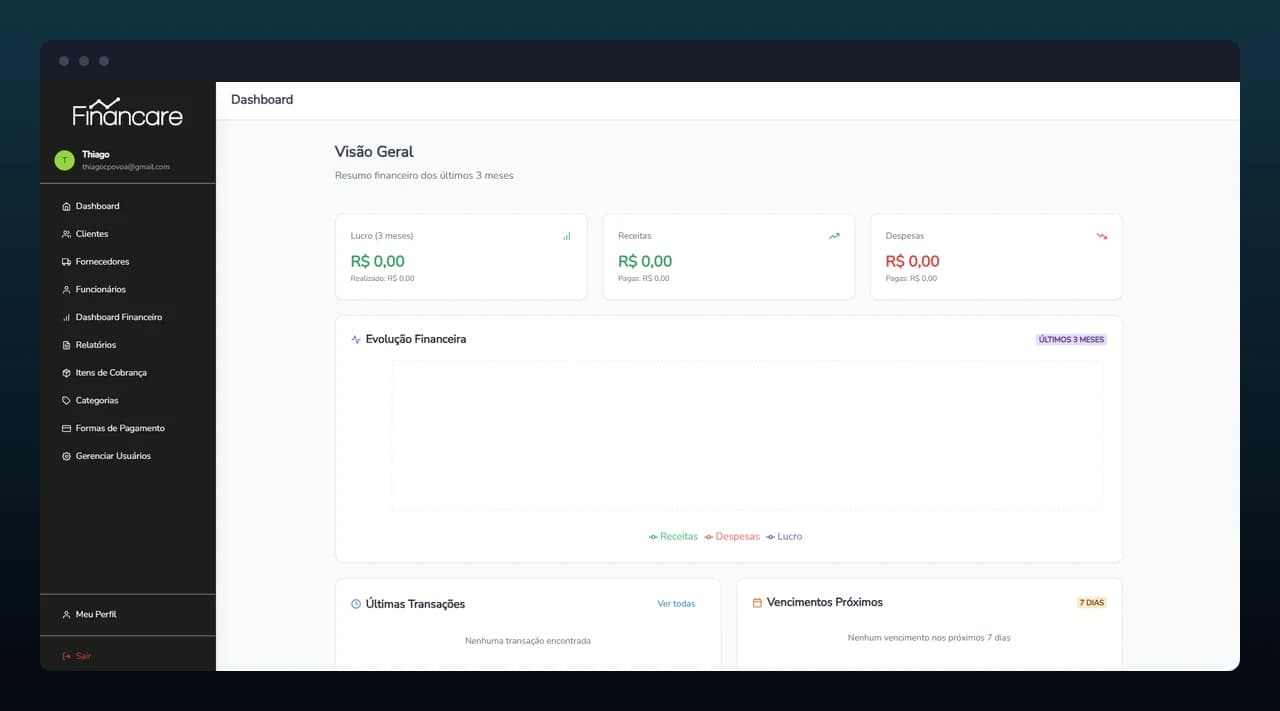
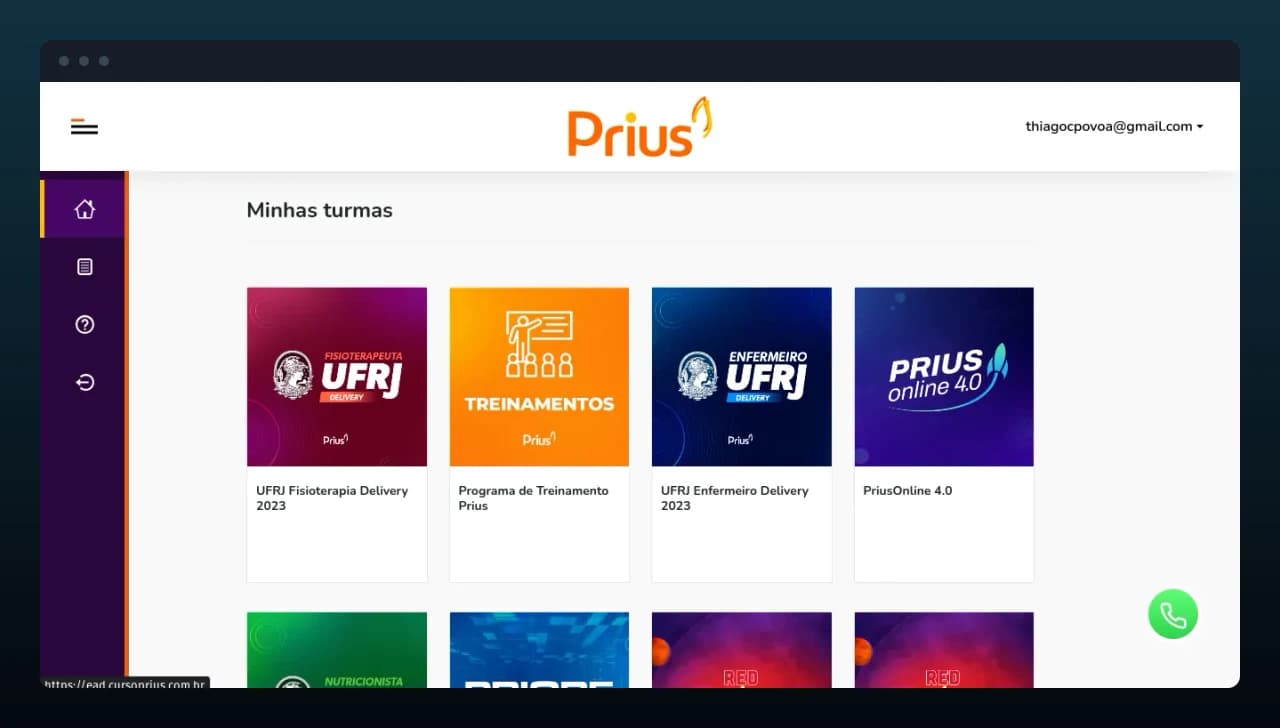
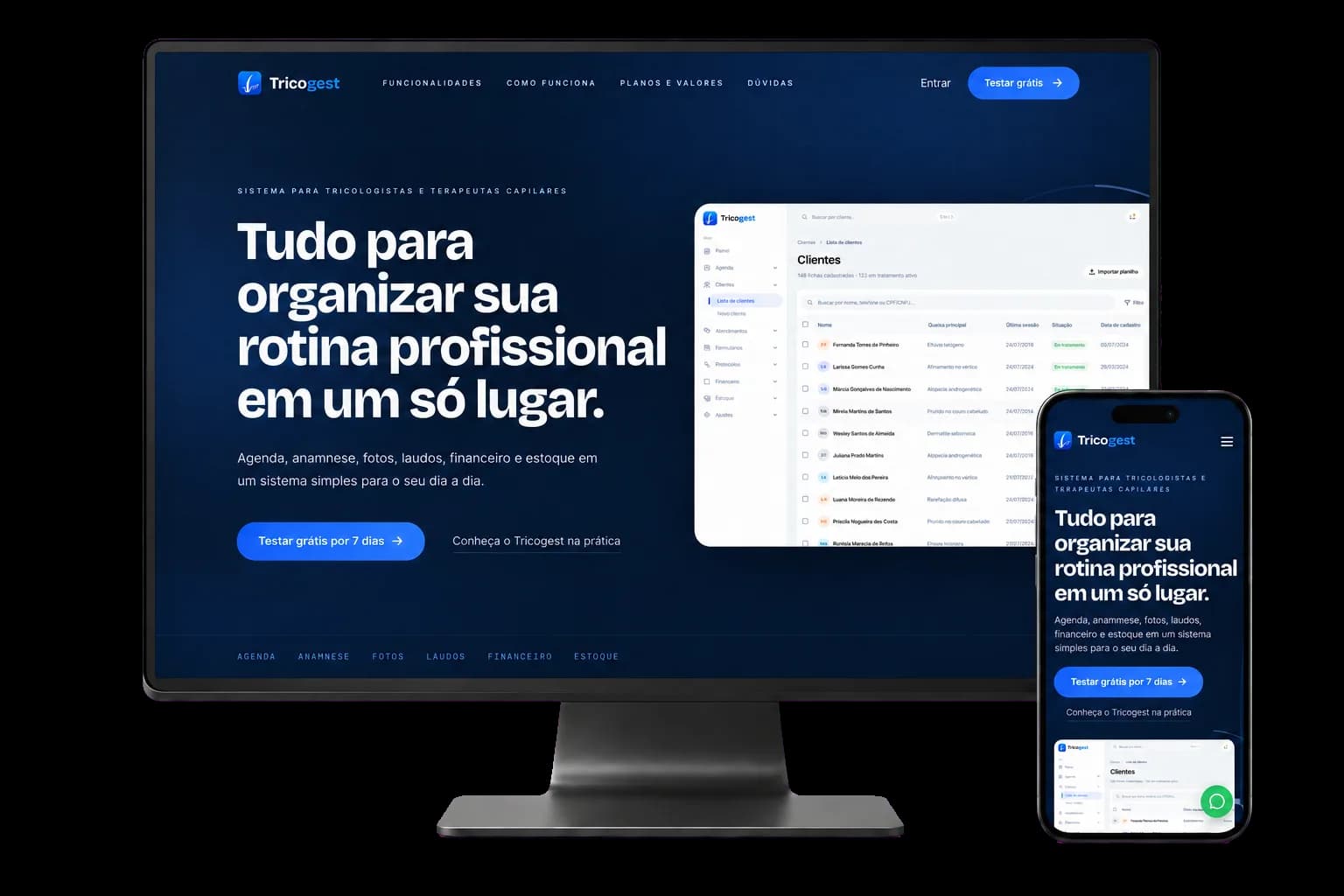
We have done this before.
How we work
Five steps between your idea and a project that is live.
You review and sign off on every step before we move to the next one. Decisions land at the right moment, adjustments happen before they turn into rework, and nothing comes as a surprise at delivery.
- 01
Conversation
We start with a 30-minute meeting to understand the business, the problem and the result you expect, before proposing any solution at all.
We leave that conversation knowing what needs to be built, who it is for and which goals the project has to reach. No cost and no commitment.
- 02
Design
We turn what we discussed into a visual proposal so you can see how the solution will be organized before any programming begins.
You get to review the structure, the main screens and the user experience. Changing a decision at this stage takes minutes. Once it is coded, it can take days. That is why we validate the direction before moving on.
- 03
Proposal
With the project properly defined, you receive a proposal setting out scope, timeline, investment and terms in writing, in clear language that is easy to check.
The price is fixed for the project and stays the same within the approved scope. If a new need comes up, it is presented and assessed before anything is changed.
- 04
Development
You follow the project through working versions published to a test environment as they are built.
On longer projects, deliveries land in cycles of up to two weeks. You can open, test and approve each phase while development moves forward.
- 05
Launch and follow-up
After final approval we put the project live, configure the production environment and train the people who will be using the solution.
For the first 30 days we monitor how it is running and make the fixes covered by the scope. After that period you can take up ongoing support or carry on with the solution independently.
Testimonials
What clients say about working with TP Webmaster.
Back in 2017 we hired TP WEBMASTER to look after our website. We were just getting started in the world of online courses, and we have grown enormously since then thanks to our partnership with TP WEBMASTER, who today handles all the development and IT infrastructure behind our in-person and online courses. We highly recommend their work for the quality, the seriousness, the commitment, the partnership, the availability and the support.
 Gustavo DiasCurso Prius
SF-CONSULT sees TP Webmaster as a strategic partner, essential to consolidating our digital presence. Their work stands out for its technical competence, its commitment to deadlines and its ability to translate our company's needs into efficient, modern solutions. TP Webmaster provides continuous, personalized support that keeps our corporate website stable, secure and performing well. We recommend their services for the seriousness, the professionalism and the quality of the results delivered.
 Silvio FernandesExecutive Director · SF-CONSULT
Working with Thiago Póvoa is an incredible experience. As a developer, he brings not only technical mastery but an exceptional talent for finding creative, efficient solutions to any challenge. His dedication, attention to detail and collaborative approach make every project run more smoothly and productively. On top of that, Thiago keeps up with the best practices in the market, which guarantees results of the highest quality. I strongly recommend his work to anyone looking for excellence in development.
 Paulo AlexandreBlog do Super Apple
Thiago is an excellent developer. Always available to help and quick to solve whatever comes up. You can trust his work completely.
 DemianEupet
Contratei o serviço do Thiago por indicação de um grande amigo meu. E não me arrependo de nada. O Thiago além de ser extremamente atencioso, educado, é rápido nas respostas e ações necessárias. Sobre o meu site, ficou lindo! Muita gente comenta como é bonito e representa muito quem eu sou como pessoa e a minha empresa. Recomendo a TP Webmaster de olhos fechados.
 ArthurCEO · Cadê Arthur
O Thiago e sua equipe foram responsáveis por todo o desenvolvimento do Tricogest. Durante os meses de construção do sistema, o Thiago me deu todo o suporte necessário, esclareceu minhas dúvidas e realizou os ajustes que solicitei. Fiquei muito satisfeita com o resultado o sistema ficou completo, robusto, rápido e funcional.
 JúliaCEO · Tricogest
Frequently asked questions
About custom systems.
How do I know whether my company needs a custom system?
A custom system makes sense when off-the-shelf tools do not fit the company's process, demand excessive workarounds or force the team to fall back on spreadsheets, notes and manual tasks.
It can also be the better choice when the company has its own rules, different user profiles, specific integrations, or wants to turn an idea into a digital product.
Before recommending development, we assess whether the problem genuinely calls for a custom solution. If an existing tool solves it better, we say so.
Do I need every feature defined before the first conversation?
No. Many clients arrive with nothing more than a problem, a spreadsheet or an idea of what they would like to improve.
In that first conversation we map how the process works, who will use the system and what result it has to deliver. From there, we help organize the features and decide what belongs in the first version.
How much does a custom system cost?
The investment depends on the features, business rules, integrations, number of users and overall complexity of the project.
Once we understand the need and outline the initial scope, we present a proposal covering what will be built and what it will cost.
You know the terms before deciding whether to start.
How long does the system take to build?
The timeline depends on the size of the project, the integrations required, how complex the rules are and how quickly approvals come back.
The schedule is defined after the first conversation and presented before development begins.
During the project you receive versions to test and follow the progress without waiting for the final delivery.
Can I start with a smaller version?
Yes. In many cases that is the best way to start.
We build a first version with the essential features so the system can go into use, the process can be validated and new needs can surface.
From there, the solution evolves in stages as usage and the company grow.
Will the system work on a phone?
Yes. Web systems can be built with a responsive interface that works on desktops, tablets and phones.
When a project needs specific device features, has to be listed in the app stores or calls for a fully mobile experience, we assess whether an Android and iOS app is also needed.
Can the system integrate with the tools my company already uses?
Yes, as long as those tools offer an API or another secure means of integration.
We can connect the system to payment providers, CRMs, ERPs, WhatsApp, marketing tools, email delivery services and other platforms.
Before including an integration in the project, we review the documentation, the limitations and any costs charged by the external service.
Can data be imported from spreadsheets or another system?
Yes, depending on the format and how the existing data is organized.
Before migrating, we review the structure, identify duplicate or incomplete records and define what can be imported safely.
When the migration requires cleanup or transformation, that step is included in the scope.
Can I request changes during development?
Yes. The project runs in stages and you get access to versions to test.
Adjustments within the agreed scope can be made as we go. When a request amounts to a new feature or changes something already approved, we explain the impact before starting.
Nothing that affects scope, investment or timeline happens without your approval.
How do I follow the development?
You get access to a test environment where you can use the features and watch the system take shape.
We also keep direct communication over WhatsApp to present deliveries, answer questions and collect feedback.
Each stage is validated before we move on to the next.
How do you handle the system's security?
Security is considered from the planning stage onward.
Depending on the project, we apply access control, permission levels, protection of sensitive information, data validation, backups, activity logging and error monitoring.
We also advise on infrastructure, passwords, credentials and the good practices that depend on the team using the system.
Do I keep the code and the credentials?
Yes. The code written specifically for your project belongs to you.
We hand over the repository and the credentials needed to run the solution. Wherever applicable, the infrastructure, database and external services are registered in your company's name too.
You can stay with us, hire someone else or migrate the system. The solution is yours.
Do I have to sign up for a monthly retainer?
No. The monthly retainer is optional and has no lock-in.
You can hire TP Webmaster to look after infrastructure, security, backups, support and the evolution of the system, but you are never tied to a contract in order to keep using the solution.
Clients stay with us because of the quality of the work, not because of a contractual obligation.
Does every system need artificial intelligence?
No. We use artificial intelligence when it genuinely solves a problem, automates a task or improves the operation.
When a conventional solution is simpler, safer and more efficient, that is the path we take.
AI is applied with purpose and technical responsibility, not just to add a feature that happens to be trending.
Do you take over systems built by other companies?
Yes. Before taking over an existing system, we run a technical review of the code, database, infrastructure and security.
After that assessment, we explain what can be kept, what needs fixing and whether it is safer to evolve the current structure or rebuild part of it.
The recommendation is presented openly before anything is changed.
Next step
Your project starts with a good conversation.
Tell us what you want to create, improve or automate. We will look at your situation, sort out the priorities and point to the best route for turning the idea into a working solution.
No cost and no commitment.